SMART Ranger
SMART (Start Managing All Resources Today) Rangers Programme as a component of Environment Education Programme with focus on natural and non-natural resource management. This programme is seen as a platform for the local communities to learn about solid waste management (SWM). It aims to encourage recycling as well as to promote a zero-waste concept. The civic science concept under this programme means to bring thoughts about issues from the mind down to the heart, by giving the local community (RA/RTs) the awareness, knowledge and most importantly, skill to take action on environmental matters.

The SMART Ranger training involves theory and practical training in SWM. The training will be focusing on training the local community (RA/RTs) as leader and trainers, so that they will be able to return to their respective areas and train the rest of their communities as SMART Rangers. By doing this, it will give the local community (RA/RTs) a feeling of ownership and responsibility towards the project, which will help to ensure its sustainability.
The SMART Ranger Programme covers 5 training modules, including half-day hands-on practical training. The modules emphasises throughout the SMART Ranger Training of Trainer will be as below:
Module 1: Solid Waste Problems and Issues
This module concentrates on the facts and figures and the environmental issues we are facing today due to improper solid waste management. What are the main sources of pollution and what are the effects of pollution?
Module 2: Solid Waste Management
What is the proper way to handle solid waste? This module teaches local community on the correct way of managing our resources through the Integrated Solid Waste Management concept, which involves acquiring the knowledge about the kinds of waste we produce and learning how to manage them properly through the 4R2C concept - Rethink, Reduce, Re-use, Recycle, Compost and Close the loop.
Module 3: The Art of Recycling
Learn about the theory behind art of recycling – how to sort out recyclables, or make use of them, and the recycling process from collecting to selling especially used cooking oil. Other alternative actions as composting and garbage enzyme production will be thought as additional/alternative programmes to venture.
Module 4: Next Step
After knowing, understanding the causes and effects of solid waste problem and what can be done, this part consist of guidelines on how to establish a zero waste system at a local level. How to initiate a proposal and what is required.
Hands-On Training
Demonstrations on how to recycle and get to put what they have learned into practice. Task will be given on how to sort recyclables and managing them correctly. They also have to produce soap and candles with their creativity on how items can be re-used and made into useful things again. From here, the local community will form their own committees which will work on initiating a recycling programme in their areas, and train their local community on proper resource management. This programme is seen as an avenue to generate their own income to sustain a solid income as well as capacity building and self-development.
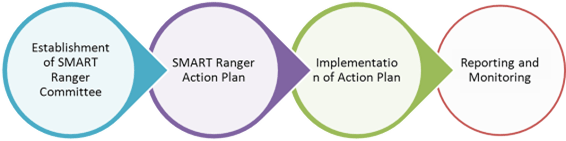
SMART Ranger Programme involves 4 step processes:
- Establishment of SMART Ranger Committee
Each local community will have to form their own committees to implement the project at their respective areas. The committee should ideally be comprised of 3 - 5 who attended the training to supervise them.
- SMART Ranger Action Plan Each local community will have to draft an action plan once they have calculated their footprint, based on their waste, water and energy generation/consumption. They will also be encouraged to involve their neighbours in their local plan activities.
- Implementation of Action Plan
Each local community involved will implement their action plans not only to reduce solid waste, cut down water and electricity usage, and reduce their carbon and water footprint but also to raise awareness and embed civic science approach to others.
- Reporting and Monitoring
The local community will also have to monitor their waste generation, water and energy used as well as recycling deeds, water conservation and energy efficiency efforts and submits monthly reports so that we can monitor their progress.
SMW covered under the SMART Ranger Programme will cover waste reduction and minimisation. Alternative methods as source reduction, reuse, composting, recycling and other methods will be emphasised through the 4R2C concept. This concept will lead the local communities to be an environmentally wise consumer (Rethink) via waste prevention and minimization (Reduce), reusing waste (Reuse), and maximizing recycling (Recycle). It is also a concept that ensures waste is recycled back to nature (Compost).
>>> Visit the SMART Ranger website here.
|


 Target Groups